Chhatrapati Sambhajinagar, December 12
The demand for the liberation of Bodh Gaya, the holiest site of Buddhism where Lord Buddha attained enlightenment, has emerged as one of the most significant socio-religious movements in contemporary India. Far beyond a mere protest, the campaign seeks to restore the administrative and managerial control of the Mahabodhi Temple complex to the Buddhist community, asserting that the site, central to Buddhist identity and heritage, has historically come under non-Buddhist influence.
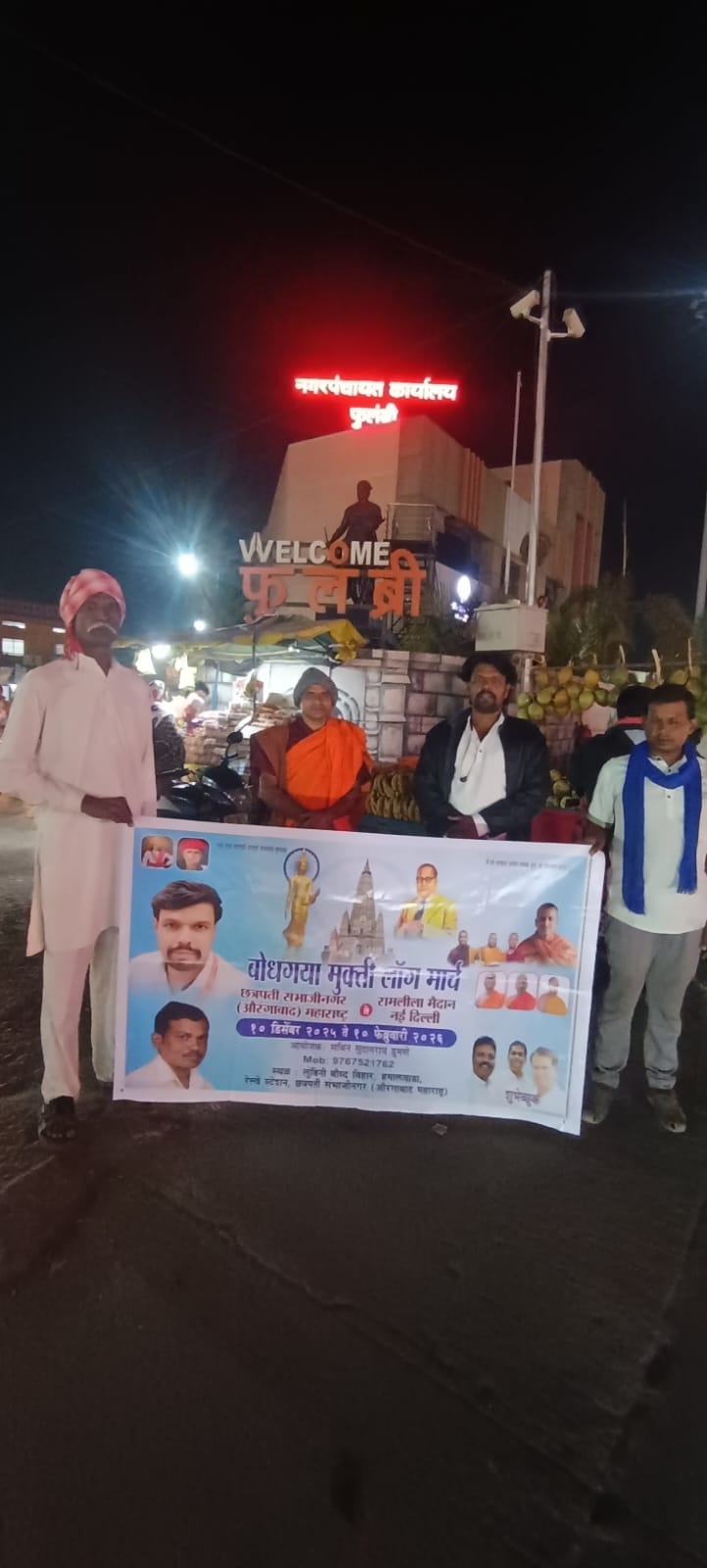
In a major escalation of this nationwide struggle, a determined long march from Chhatrapati Sambhajinagar (formerly Aurangabad) to Delhi commenced on December 10 under the leadership of Ven. Bhante Kulinputra, a prominent figure in the Bodh Gaya liberation movement. The march is being actively supported by social activist Sachin Dumne and a dedicated team of volunteers.
Hundreds of followers of Dr. B.R. Ambedkar, Buddhist monks, youth, women, and members of the Bahujan community committed to the teachings of Lord Buddha have joined the padyatra, lending it considerable strength and visibility. Participants are chanting the sacred Buddhist refrain “Buddham Sharanam Gacchami” as they march forward, reaffirming their faith in the transformative and egalitarian message of the Enlightened One.
Prominent activists including Uttamrao Sonawane, Nilesh Pattekar, Pravin Jamdhade, and Engineer Deepak Gayatilak extended support to the marching Bhikkhu Sangha by donating essential health kits for the long journey.
The marchers aim to reach the national capital to press their longstanding demand before the Central government: the repeal of the Bodh Gaya Temple Act of 1949 and the reconstitution of the temple management committee to ensure majority representation and leadership of Buddhists, in keeping with the site’s global significance as the cradle of Buddhism.
The Mooknayak extends its solidarity to this peaceful and democratic movement for the reclamation of Buddhist religious and cultural rights.
Chhatrapati Sambhajinagar to Delhi Long March Launched for Bodh Gaya Liberation Movement